Day 2 - Athens tour
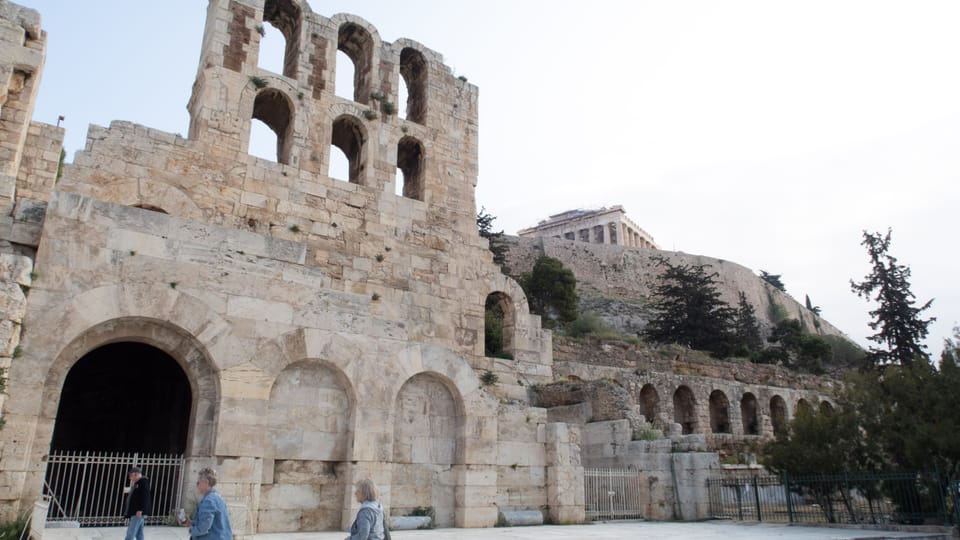
Athens, Sunday, April 12 2026
Got up early and took the included excursion, which was a bus tour of Piraeus and Athens. The tour guide was a charming young woman who reminded us that it is Orthodox Easter. Very few shops were open because of the Easter holiday. Our guide said that many people from Athens go home to their villages.
First we drove around Pireaus. There are several harbors in Pireaus. It can accomodate larger cruise ships, like ours (the Viking Vesta).
One of the smaller harbors is called "Pashalimani," which translates as "Pasha's Harbour." The Pasha was the Ottoman ruler of Greece. As our guide described the Ottoman rule of Greece, she seemed still angry about it even though it ended over a hundred years ago - Greece became independent of the Ottoman empire in 1821.
We stopped at the site of the first modern Olympic games in 1896. It's a large stadium with an oval track. I'm sure it was very impressive in its day, but it seems small by current standards. The stadium was made of local marble.
It is surprising how much marble gets used around Athens, even for things like sidewalks. We think of marble as a luxurious item, but here they treat it the way we treat red sandstone at home.
After the Olympic stadium, the bus continued to the area near the Acropolis. Once again, we wandered through the neighborhood we had stayed at the on Friday night. Our guide walked us past the entrance to the Acropolis and the Acropolis museum; both were closed due to Easter.
A few restaurants were open, but most were closed. A couple of the restaurants that were open were roasting lambs on spits over a charcoal fire - this is the traditional Easter dinner in Greece.
We wandered to the North-East of the Acropolis area, through the Plaka neighborhood, at the base of Acropolis hill. It is one of the oldest continuously inhabited neighborhoods in Athens. The streets are narrow, and many of the buildings are in a neoclassical style. We didn't buy anything, but it was fun to browse the shop windows.
We realized that we were not too far from the church we had visited (unsuccessfully) on Saturday evening, and that a Mass would begin soon. We walked the 1/4 mile to the Church and arrived as the Mass in Greek was concluding.
The Church was St. Dionysius the Areopagite. I was unfamiliar with him. It seems he was a judge in Athens who converted to Christianity when St. Paul was preaching. He is recognized as a saint by both the Roman Catholic and Eastern Orthodox churches, and is the patron saint of judges.
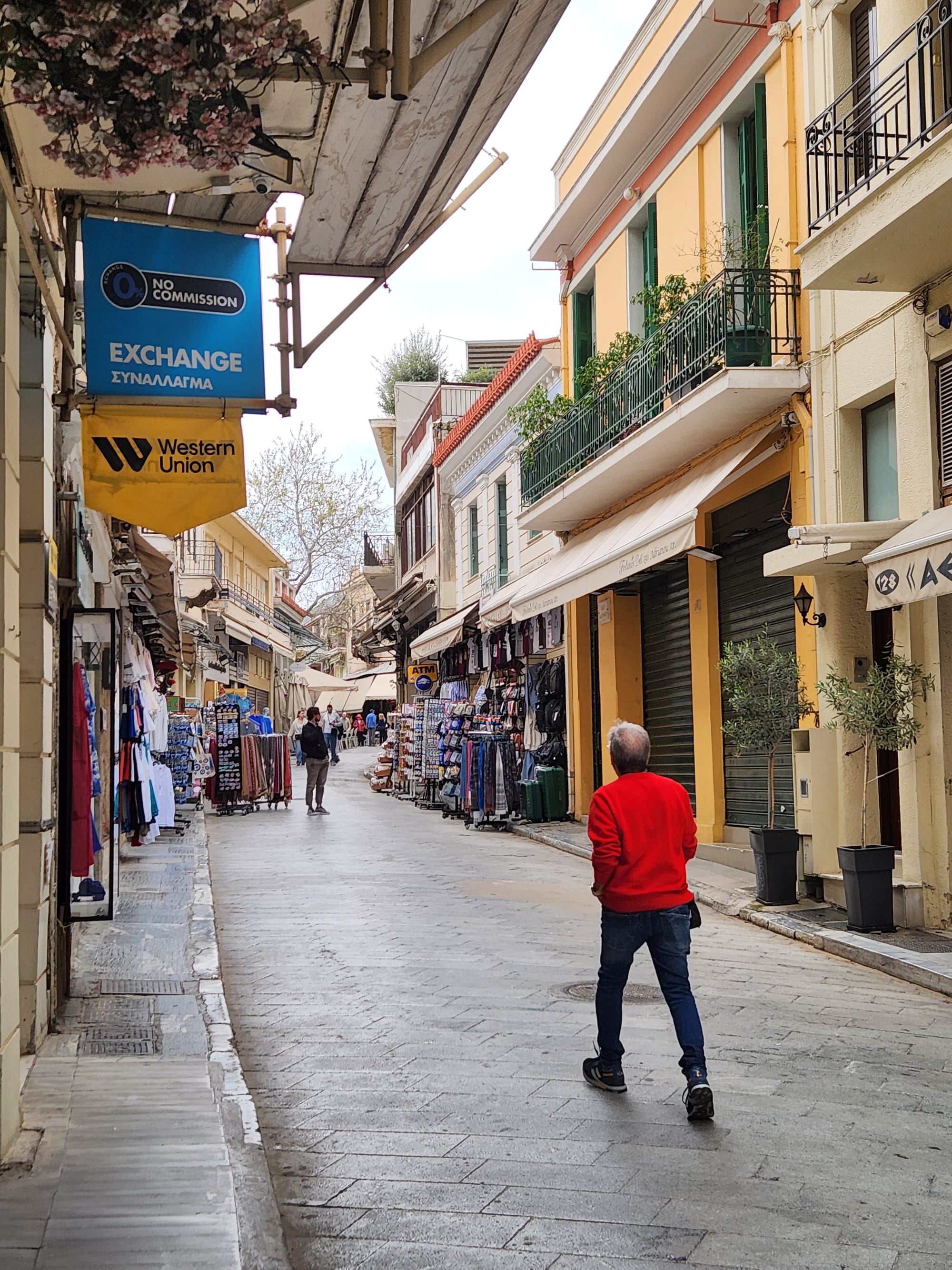
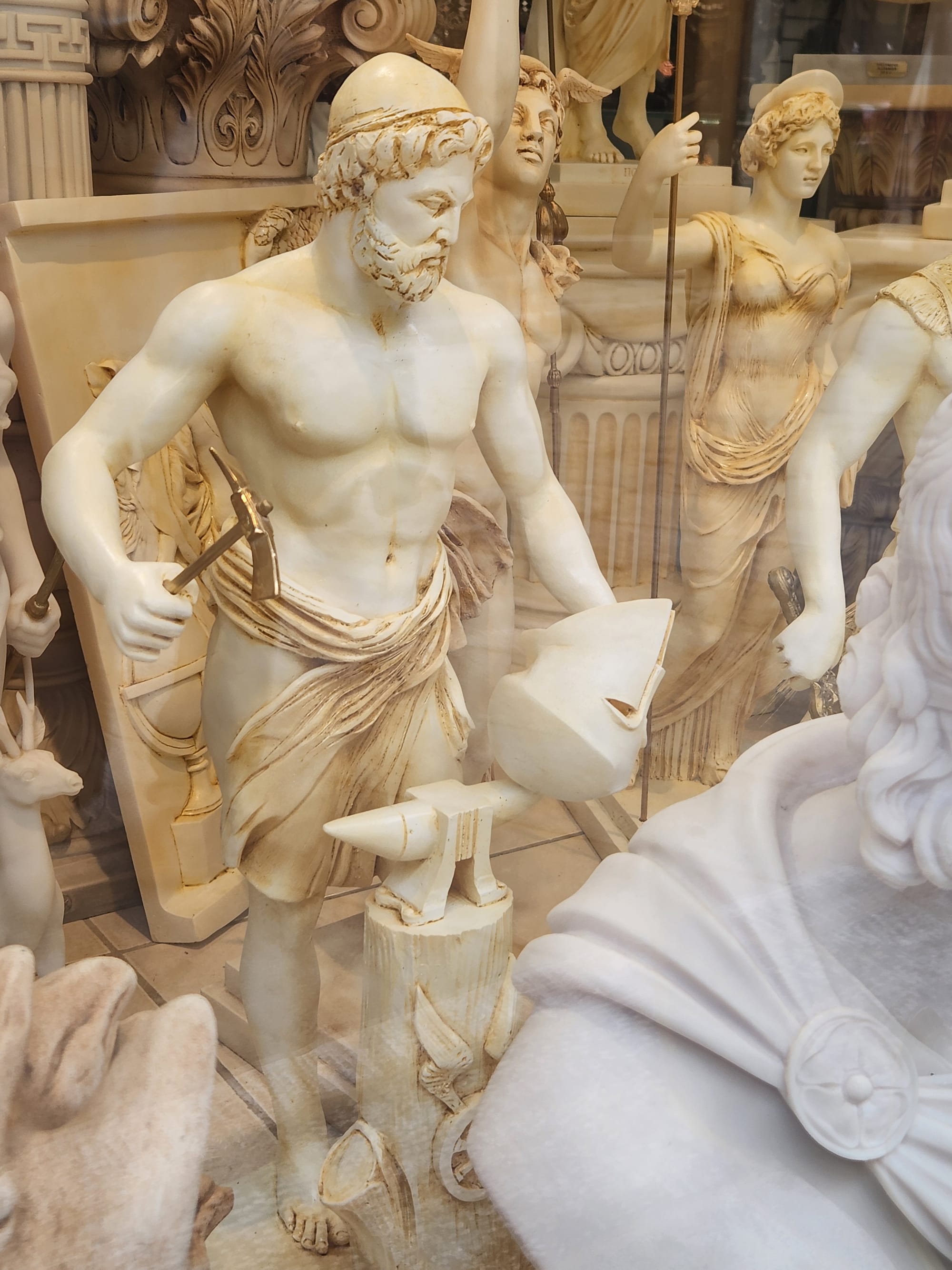
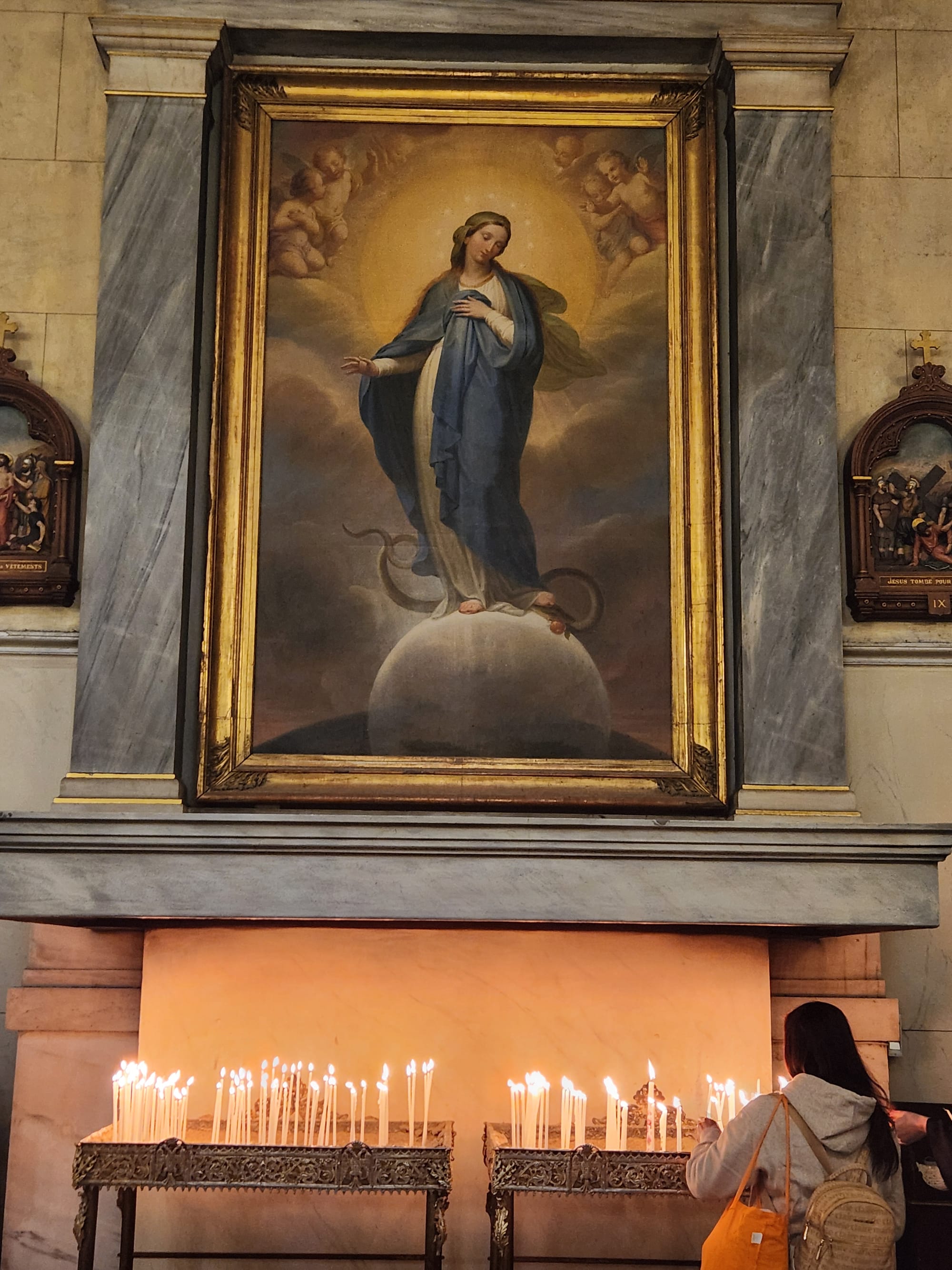
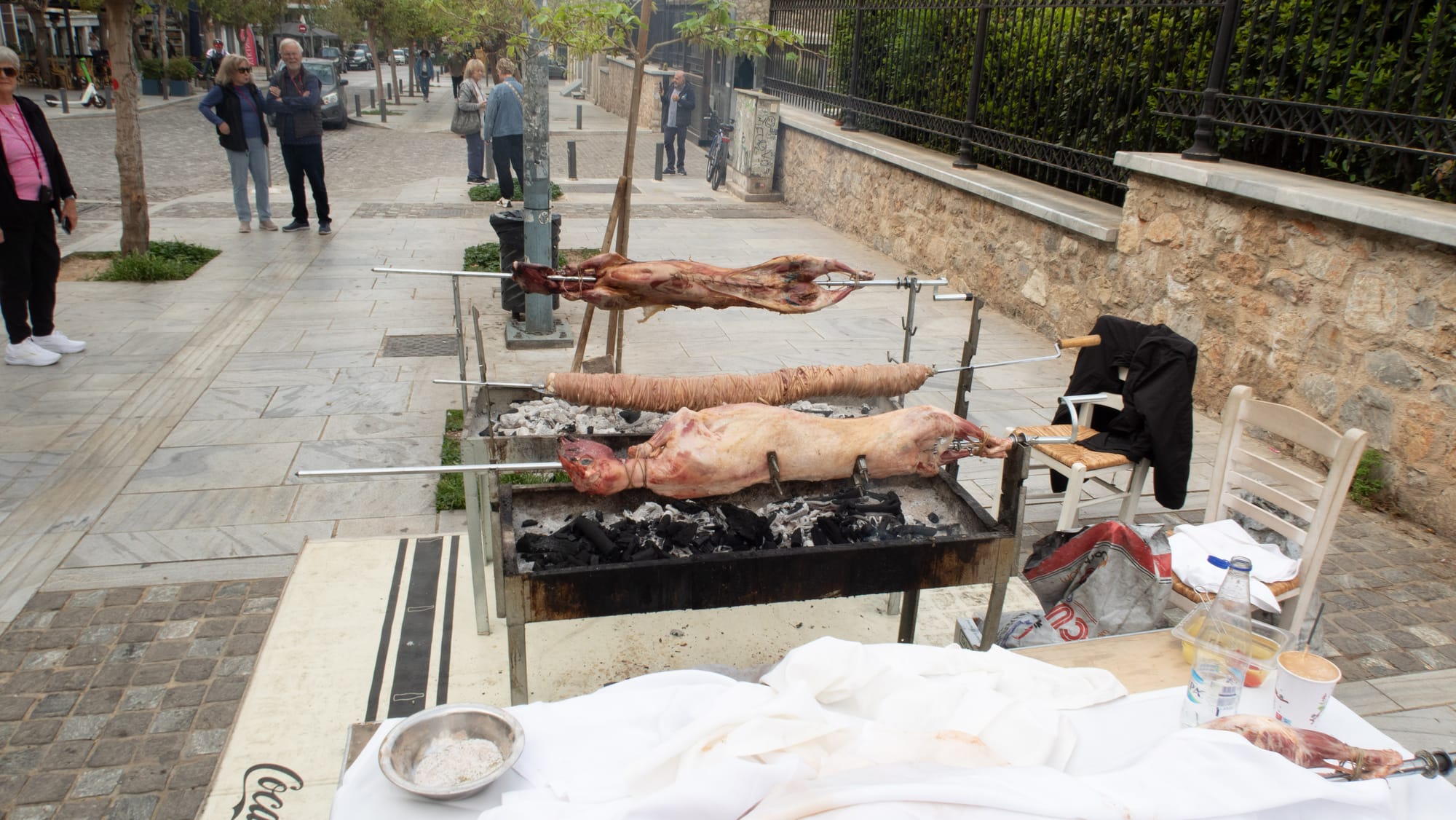
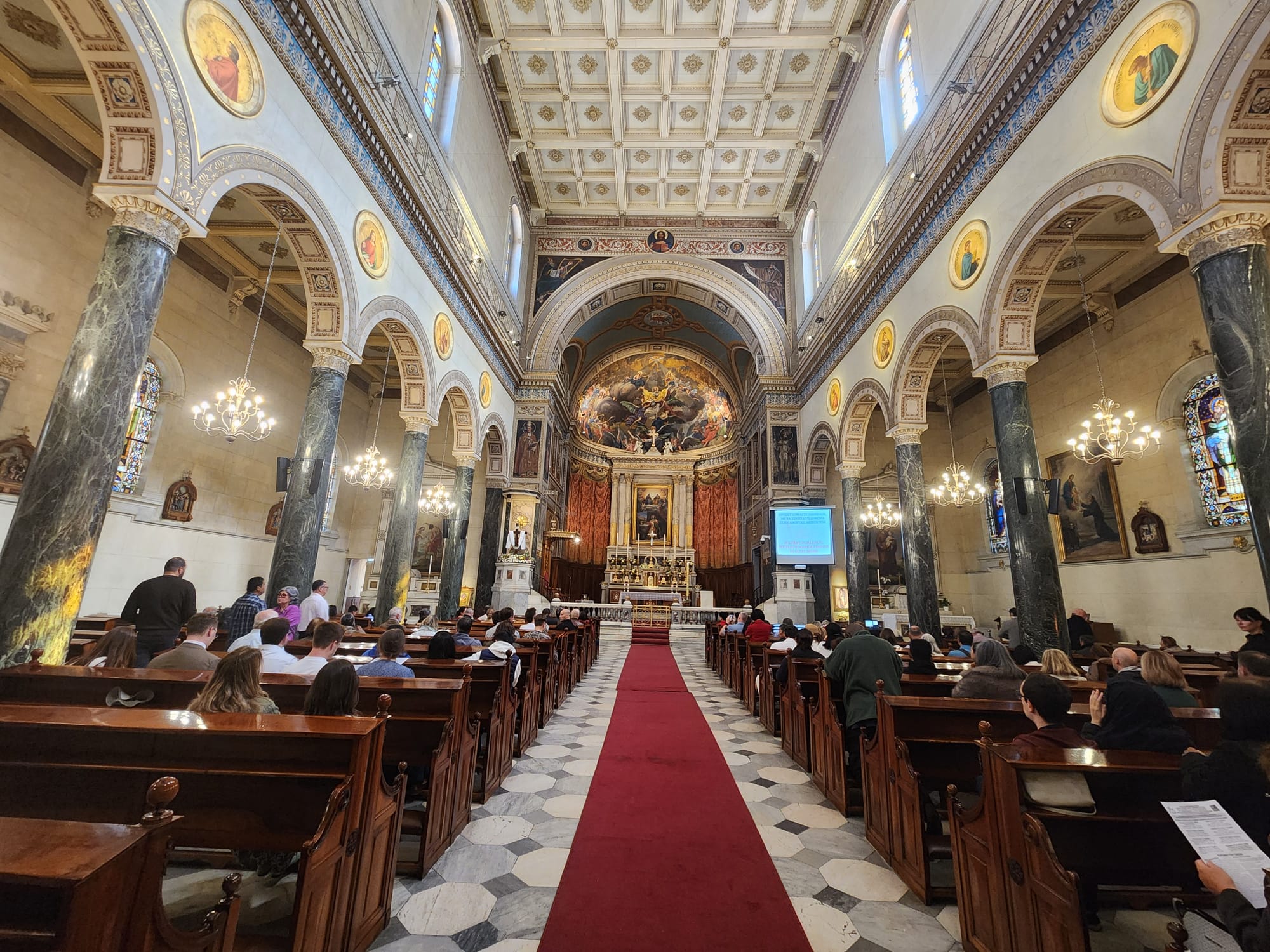
Clockwise: Narrow streets in Plaka, Traditional statuettes, inside St. Dionysius, Lambs on a spit above charcoal
Member discussion